On the occasion of the International Day for the Conservation of the Mangrove Ecosystem on July 26, it is worth remembering that:
When we think of the natural treasures of the Mexican Caribbean, we often imagine white sand beaches, coral reefs, and turquoise waters. However, there is a silent ecosystem that makes much of this natural wealth possible: the mangrove. Considered the true submerged gardens of the Caribbean, these coastal forests are fundamental to the health of the oceans, the protection of coastal communities, and the fight against climate change.
The importance of mangroves in Quintana Roo goes far beyond their scenic beauty. They are veritable nurseries of life that sustain marine biodiversity, act as a natural barrier against hurricanes, and store enormous amounts of carbon, making them indispensable allies for the planet’s environmental balance.
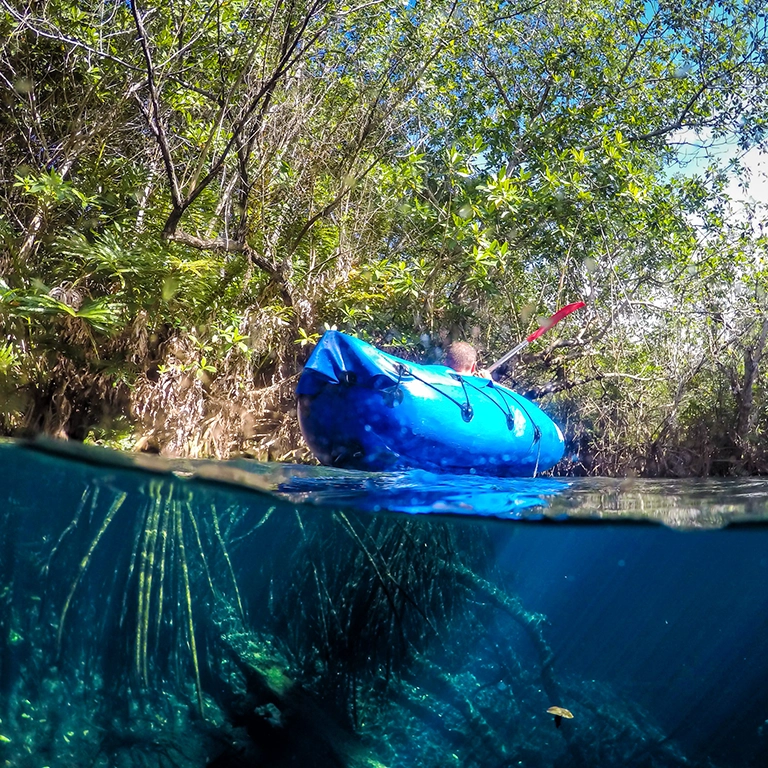
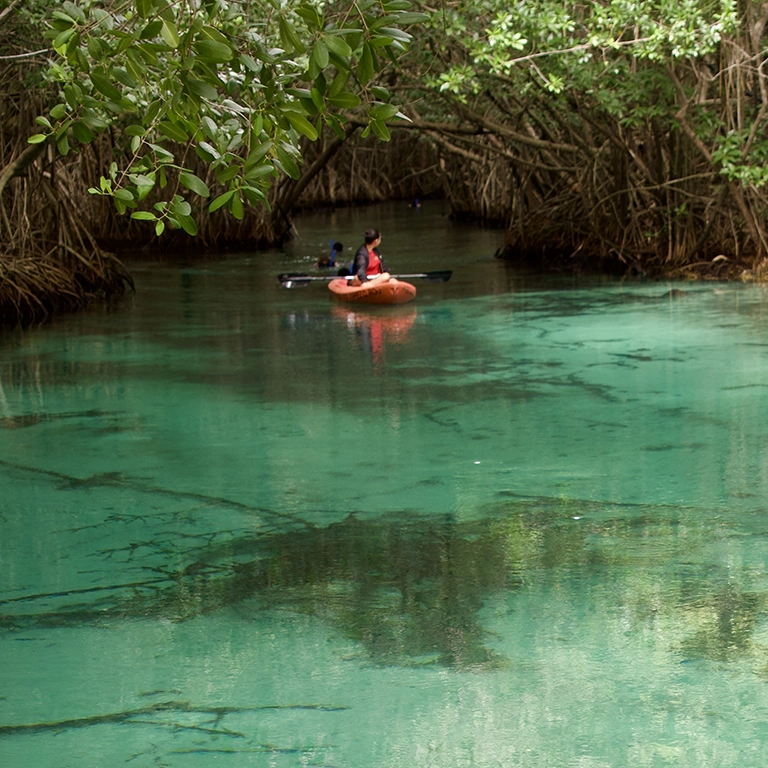
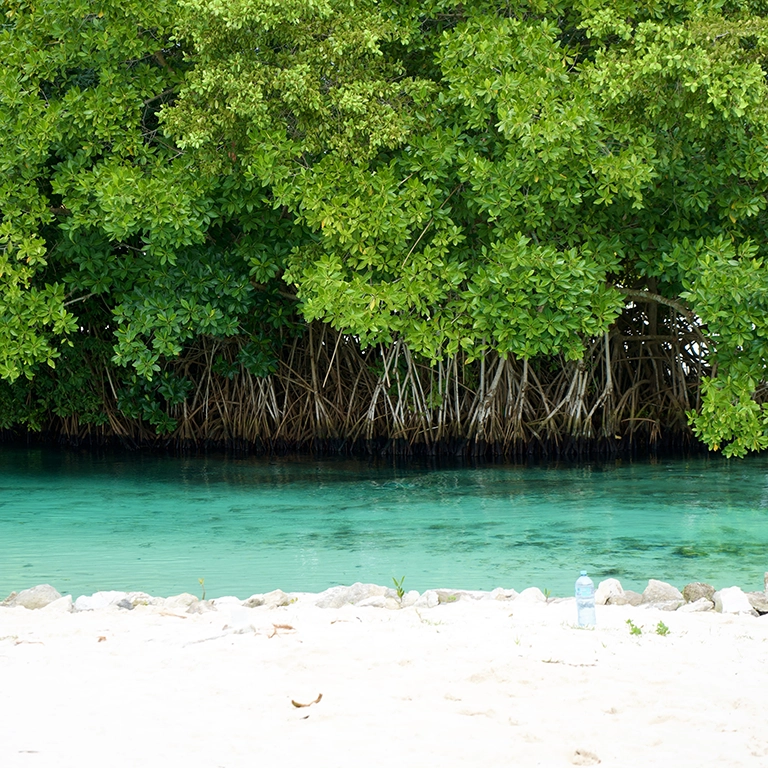
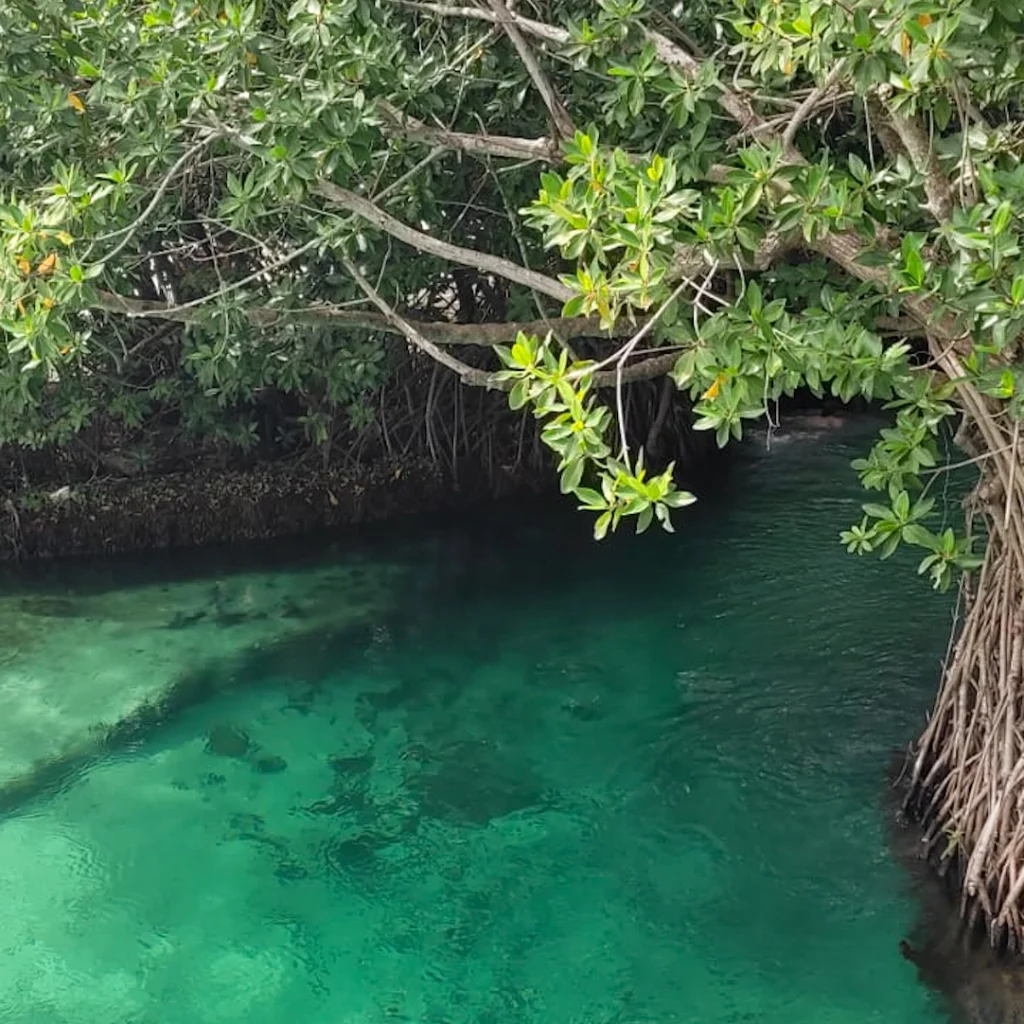
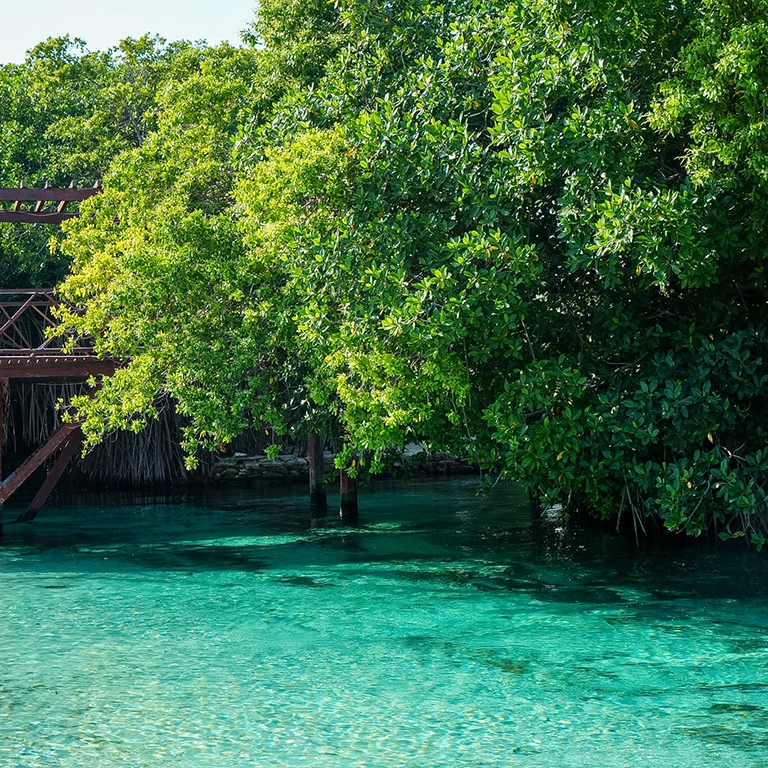
The Caribbean Mangrove Ecosystem: A Bridge Between Land and Sea
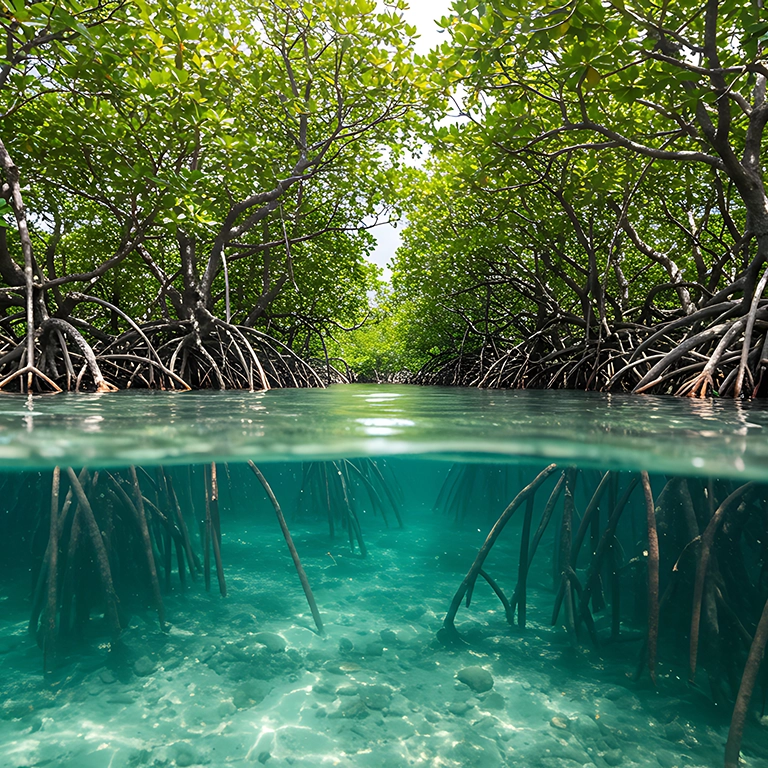
The Caribbean mangrove ecosystem thrives in areas where the freshwater of rivers and lagoons mixes with the saltwater of the sea. In these unique environments, so-called saltwater trees flourish—species specially adapted to survive in flooded soils with high salt concentrations. In Mexico, there are four main mangrove species: red, white, black, and buttonwood. Each plays a specific role within the ecosystem, forming complex root networks that create natural refuges for thousands of organisms.
At first glance, mangroves may appear to be dense, impassable forests. However, beneath their roots, one of the most important ecological processes on the planet unfolds.
Mangroves: A Great Nursery for Marine Life
One of the greatest contributions of mangrove forests in Mexico is their function as a natural nursery for marine species. Submerged mangrove roots provide shelter and food for juvenile fish, crustaceans, mollusks, and numerous other species that later migrate to reefs and the open sea. In Quintana Roo, mangroves maintain a direct relationship with the Mesoamerican Reef System, the second largest reef in the world. Many commercially important and ecologically vital species depend on these ecosystems during the early stages of their lives.
Without mangroves, fish populations would decrease significantly, impacting both biodiversity and essential economic activities for coastal communities.
A Natural Barrier Against Hurricanes and Storms
The hurricane season serves as a stark reminder each year of the vulnerability of the Caribbean coast. In this context, mangroves represent one of nature’s most effective defenses. Thanks to their dense roots and plant structure, they act as a powerful natural barrier against hurricanes, reducing wave force, decreasing erosion, and mitigating the impact of coastal flooding.
Several studies have shown that areas protected by mangroves suffer less damage during extreme weather events. In a region prone to tropical storms and hurricanes, conserving these ecosystems is a crucial environmental and social protection strategy.
The Hidden Champions of Carbon Capture
Mangroves are also key players in the fight against climate change. Although they occupy a relatively small area compared to other ecosystems, they have the capacity to capture and store large amounts of carbon for centuries. This phenomenon, known as “blue carbon,” makes mangroves one of the most efficient natural systems for reducing the concentration of greenhouse gases in the atmosphere.
In addition to producing oxygen and improving water quality, they contribute to the climate resilience of coastal areas, reinforcing their role within global conservation strategies.
Hacienda Tres Ríos: A Model of Mangrove Conservation in Quintana Roo
Protecting mangroves requires concrete actions and a long-term commitment. A prime example in the region is the work carried out at Hacienda Tres Ríos and the Tres Ríos Natural Park, where mangrove conservation is an integral part of their sustainable tourism model. Following the damage caused by Hurricane Wilma, a major ecological recovery and restoration program was undertaken, successfully rescuing extensive areas of mangrove forest. Currently, this area is home to all four mangrove species found in Mexico: red, white, black, and buttonwood.
Reproduction, reforestation, and monitoring efforts have rehabilitated a key ecosystem for the region, demonstrating that environmental protection and tourism can coexist responsibly.
Understanding the importance of mangroves in Quintana Roo also means recognizing that the future of the Caribbean depends, to a great extent, on the health of these extraordinary coastal forests. Thanks to conservation initiatives like those developed at Hacienda Tres Ríos, it is possible to ensure that these submerged gardens continue to sustain life for future generations.