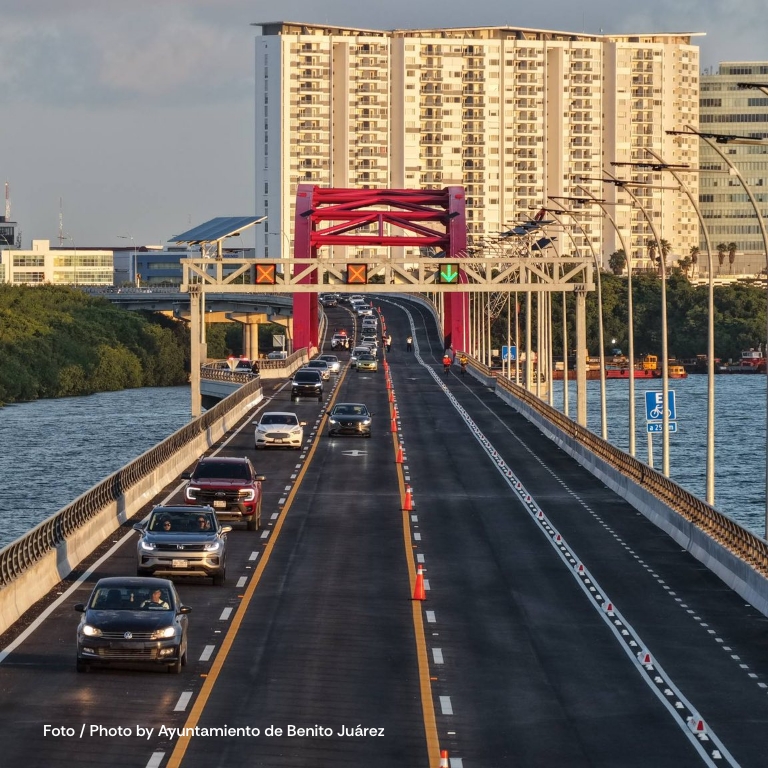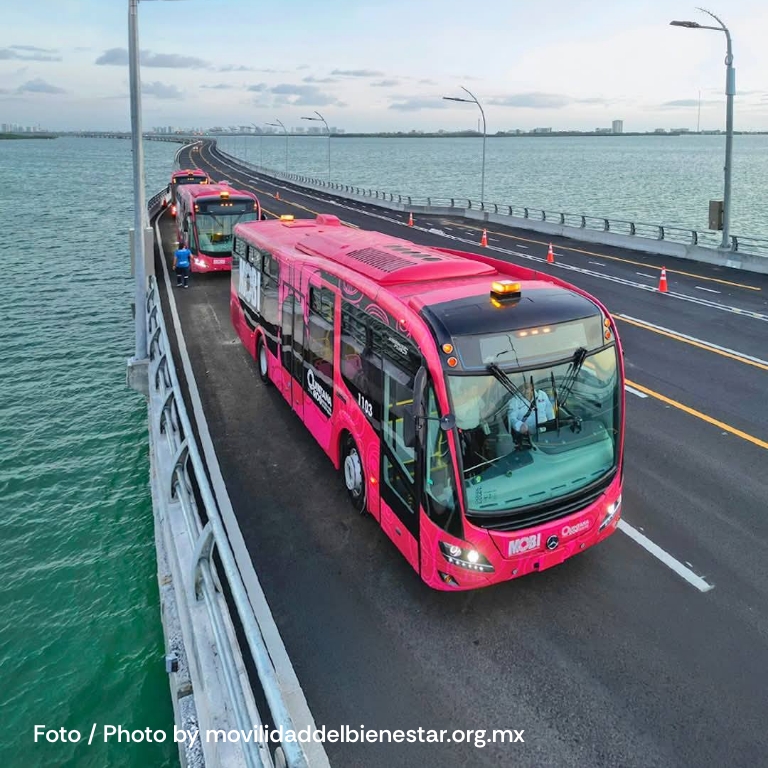
After nearly four years of work, engineering adjustments, and challenges that tested builders and authorities, the long-awaited Nichupté Vehicular Bridge has finally opened to traffic. This project is considered historic for mobility in Cancún and its Hotel Zone.
The official inauguration took place on May 2nd, although the first vehicles didn’t begin traveling on the new roadway until May 6th, 2026, marking a turning point for thousands of residents and tourists who previously faced long traffic jams, especially during peak hours.
From very early in the morning, motorists began testing the new route that connects downtown Cancún with the Hotel Zone, crossing the Nichupté lagoon system. What used to take more than an hour on days with high tourist season is now reduced to just a few minutes thanks to this new road alternative.
A Project That Seemed Impossible
Construction of the bridge began in August 2022 with an ambitious goal: to complete it in just two years. However, as work progressed, engineers encountered a series of ecological, geological, and logistical challenges that forced them to rethink several stages of the project.
Building a structure on karst terrain and over water was already a complex challenge in itself, but one of the discoveries that most impacted the project was the finding of a huge underwater cavern with a 220 feet opening and a depth of nearly 427 feet.
Given this scenario, the original design had to be modified to incorporate an elevated section using a 330-feet-long self-supporting arch bridge, capable of spanning the cavern without compromising the structure’s stability or affecting the delicate subsoil of the region.
Engineering Over the Lagoon
The bridge consists of an elevated concrete viaduct supported by piles driven into the lagoon bed. During various stages of construction, the “Top Down” method was employed, a technique that allowed work to proceed from the top down to minimize the impact on the mangrove ecosystem and the Nichupté Lagoon.
The bridge is 11.8 km long, making it the longest in Mexico and the second longest in Latin America. It has three traffic lanes: two fixed and one reversible lane, which carries traffic from the city center to the Hotel Zone in the morning and vice versa in the afternoon, following typical traffic patterns. It also includes a bike path.
Safety Priority
The maximum speed limit is 37 miles per hour. Authorities also announced that access will be restricted to pedestrians, cargo vehicles, and motorcycles. Furthermore, when winds exceed 25 miles per hour, bicycle traffic will be temporarily suspended as a safety measure.
Environmental Compensation
One of the most debated issues during construction was the environmental impact. As part of the compensatory measures, 118 hectares of seagrass have already been restored within the Nichupté lagoon system.
The comprehensive project also includes the recovery and conservation of 300 hectares of mangrove forest, considered essential for protecting biodiversity and mitigating the effects of weather events in the region.
Ongoing Complementary Works
Although the bridge is already operational, complementary works are ongoing at the intersections with Boulevard Kukulcán in the Hotel Zone, as well as at the Pioneers Roundabout in downtown Cancún.
These connectivity works are scheduled for completion in October 2026 and aim to fully optimize traffic flow at both ends of the bridge.