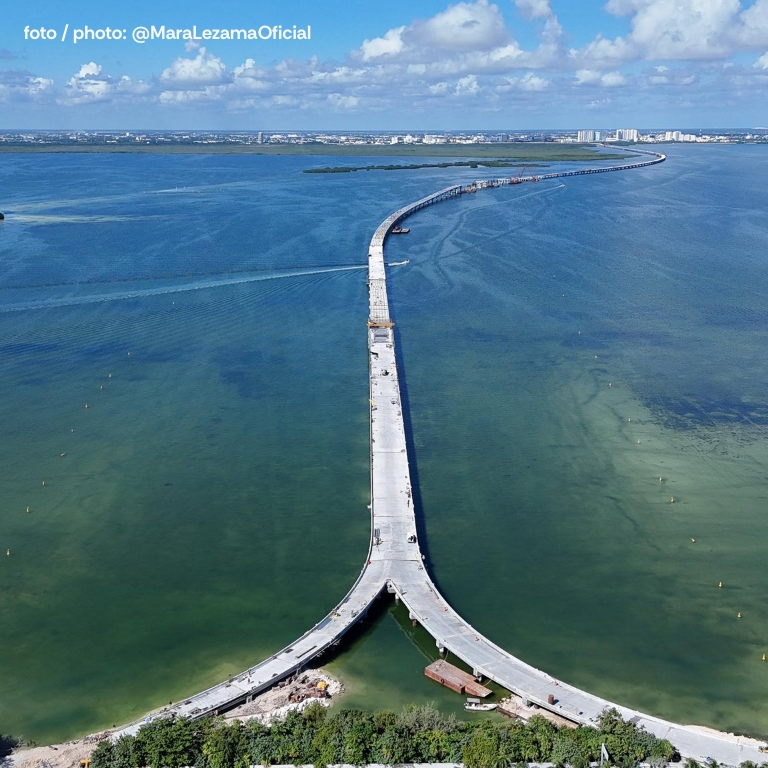
Construction of the Nichupté Vehicular Bridge in Cancún is showing significant progress as of the end of 2025. This strategic infrastructure project, designed to improve mobility between downtown Cancún and the hotel zone, is now over 92% complete. As an integral part of the bridge construction, environmental compensation measures are being implemented, resulting in the restoration of 118 hectares of seagrass in the Nichupté lagoon system. The total project encompasses 300 hectares of mangrove forest.
The technical intervention was geographically distributed to maximize the project’s biological success, adapting planting techniques to the needs of each area. In the northern sector of the lagoon system, specialists rescued and planted 2,500 seedlings of the species Thalassia testudinum and 993 seedlings of Halodule wrightii. Meanwhile, in the central and southern zones, efforts focused on planting 6,510 rhizomes of Thalassia testudinum and a total of 30,320 units of Halodule wrightii. These seagrasses form meadows that constitute important habitats and feeding grounds.
The success in planting these species not only protects marine biodiversity but also strengthens the lagoon’s resilience to climate change, demonstrating that it is possible to advance urban development in harmony with the preservation of the Caribbean’s natural heritage.