The Duality That Defines Our Identity
Mexico is a country of fascinating contrasts, where solemnity and joy, the past and the present, life and death coexist within a single cultural identity. Few nations express this contrast as intensely as Mexico—especially during November, a month when two major commemorations invite us to reflect on who we are: the Day of the Dead and the anniversary of the Mexican Revolution.
At first glance, these two celebrations appear to represent distinct worlds. One honors those who have departed, while the other remembers those who fought to transform the destiny of a nation. Yet, they share a common essence: the profound love that Mexicans hold for life, memory, and their own roots.
Death as a Celebration of Life
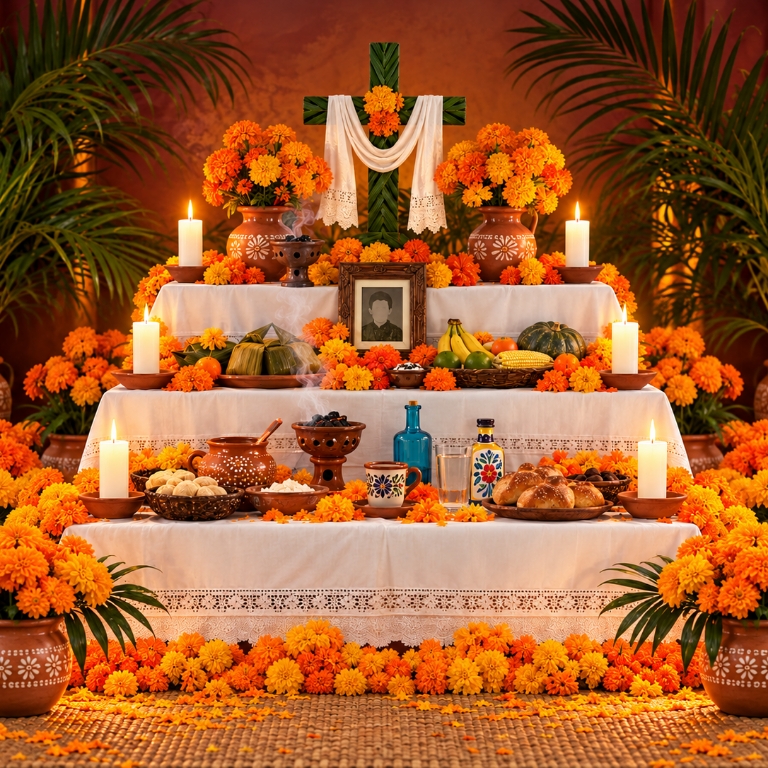
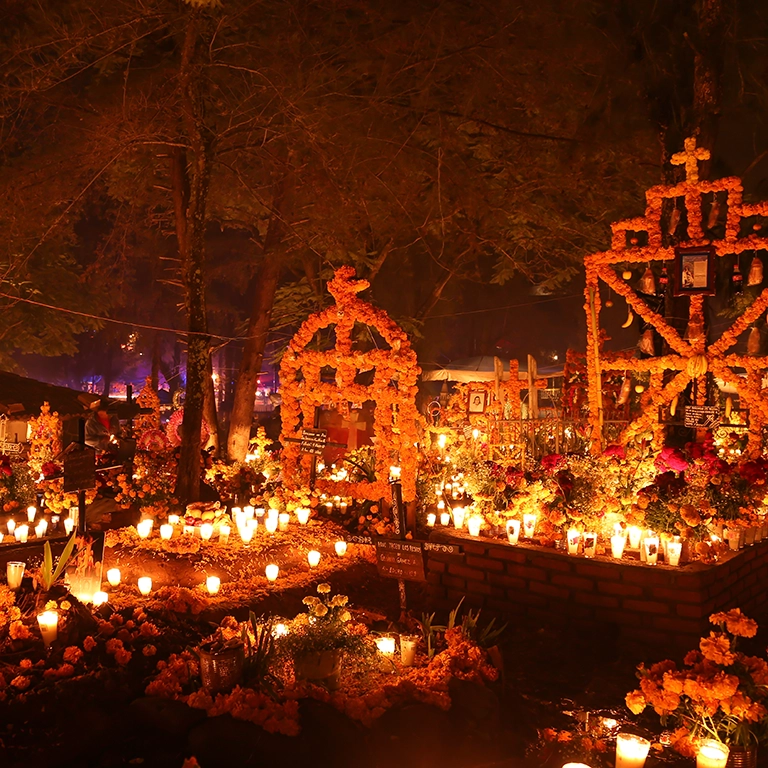
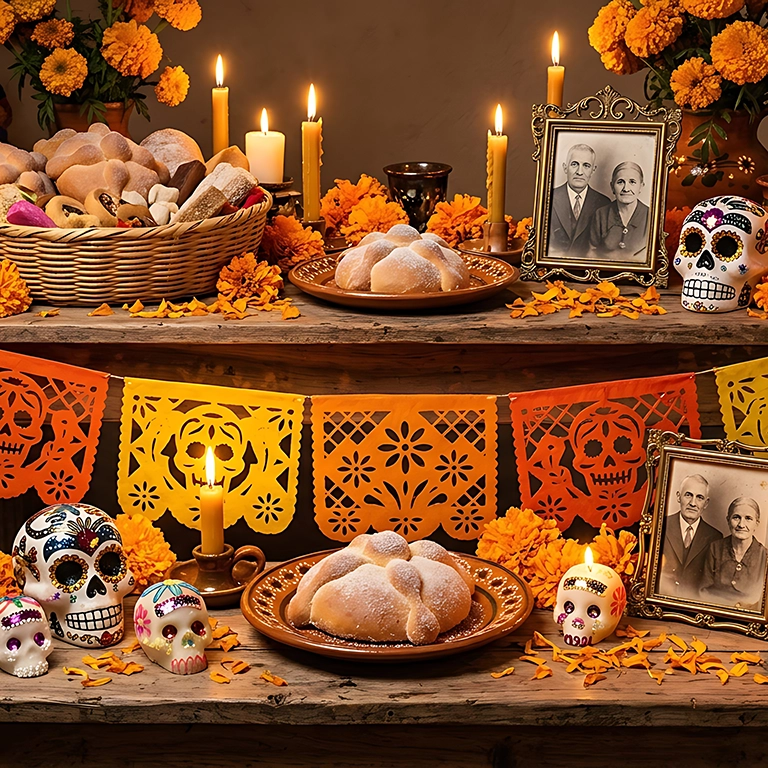
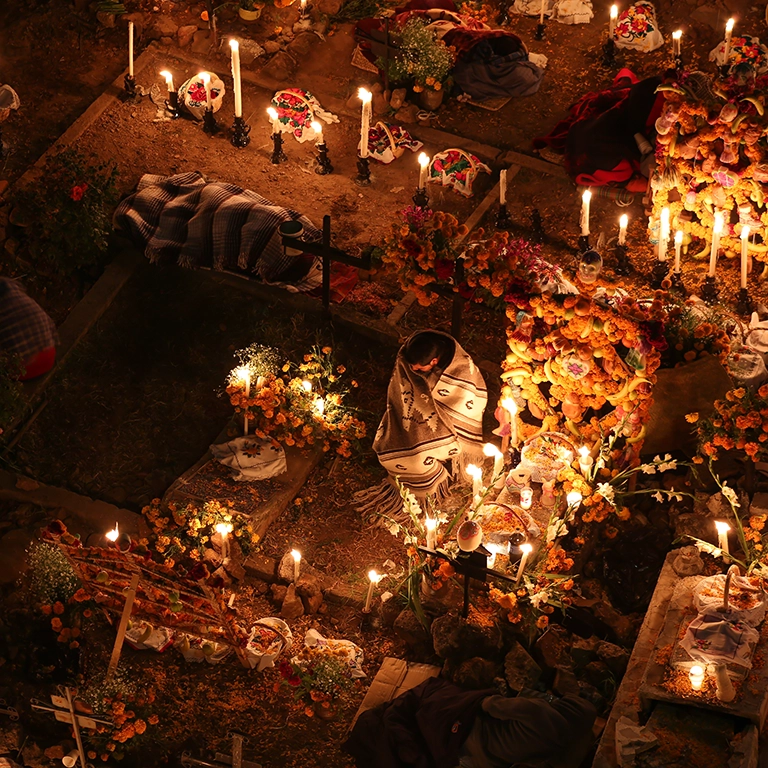
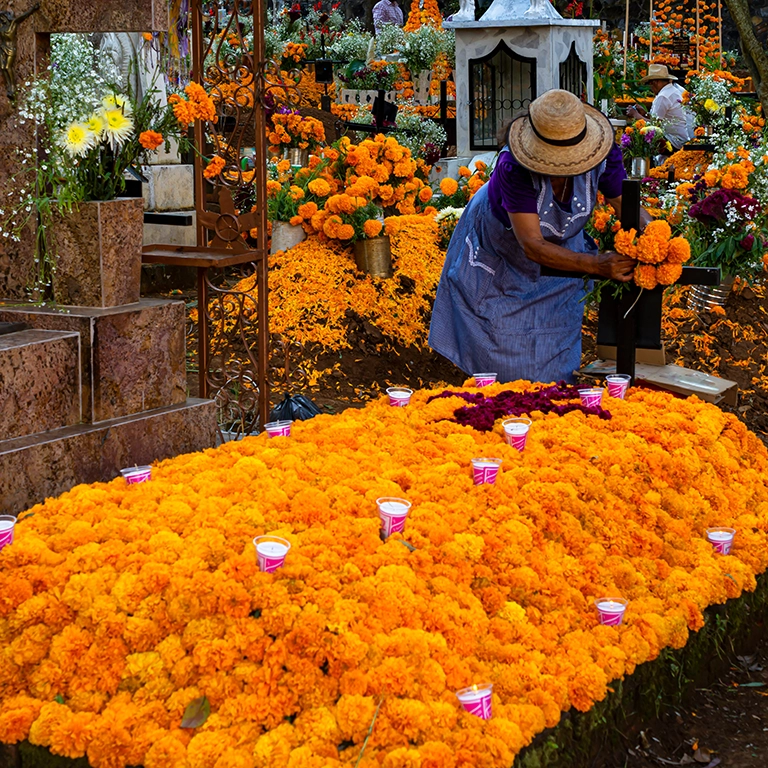
Every November 1st and 2nd, Mexico fills with marigolds, candles, altars, music, and scents that evoke the symbolic return of our loved and departed ones. The Day of the Dead—a tradition that weaves together ancient Indigenous beliefs and elements of Catholicism—reflects a unique way of understanding existence: death is not necessarily a final farewell, but rather a transformation of the bond between those who have departed and those who remain.
This closeness to death does not imply indifference toward loss; rather, it reflects an extraordinary cultural capacity to transform nostalgia into celebration. To remember is to keep the presence of our ancestors alive, to share their stories, and to acknowledge that our own identity is shaped by those who came before us.
The Mexican Revolution: Fighting for a Better Life
A few weeks later, on November 20th, Mexico commemorates the beginning of the Mexican Revolution of 1910—a movement that profoundly shaped the country’s political, social, and cultural history.
If the Day of the Dead represents respect and joy for memory, the Revolution symbolizes the determination to transform the present and build a more just future. Its ideals of freedom, democracy, social justice, and access to land form part of a legacy that continues to influence Mexico’s national identity.
The Revolution also left a profound mark on the country’s artistic and popular expressions—from revolutionary corridos and literature to the Mexican muralist movement, which transformed the history and aspirations of the people into monumental imagery. This includes the famous Catrina, which originated as a critique of those who adopted foreign identities, only to evolve into a national symbol representing the sophisticated duality of life and death.
Modern and Ancestral Mexico: Two Complementary Forces
This apparent contradiction—honoring death while fighting passionately for life—reveals one of the deepest traits of our culture: Mexicans understand that the past must not be forgotten and that the future is worth building.
We are a nation that preserves ancient rituals while embracing new forms of expression; a nation that finds a sense of belonging in its traditions and an opportunity for transformation in its social movements. It is a living culture—one that does not remain static, but rather evolves without ever forsaking its roots.
From family altars to revolutionary-themed parades, and from Indigenous communities to vast contemporary cities, Mexico demonstrates that modernity and ancestral heritage are not opposing forces, but rather complementary parts of a single, shared history.
An Identity That Celebrates, Remembers, and Transforms
The Mexican duality of life and death is, in essence, a powerful affirmation of our own existence. We celebrate those who are no longer with us because we recognize the value of their time on earth, and we remember those who fought for justice because we believe in the possibility of a better society.
Such is Mexico: a country that honors its past while always looking ahead—a nation that turns memory into celebration and hope into a driving force for change. For to understand the complex and vibrant soul of the Mexican people is to discover that our traditions not only recount the story of who we once were, but also keep alive the essence of who we are and what we aspire to become. Mexico lives on in its memory, in its struggles, and in its extraordinary capacity to celebrate existence.