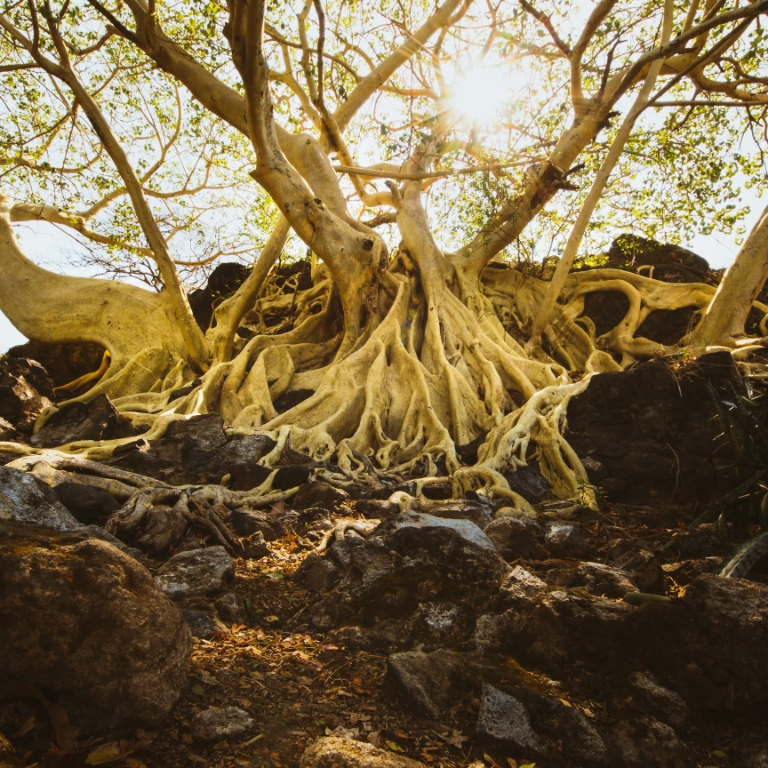
Amate paper—its name derived from the Nahuatl word *amatl*, meaning “bark”—was one of the most significant materials used by Mesoamerican cultures. It was crafted primarily from the inner bark of trees such as the *amate* and the *jonote*. The production process involved removing the bark, soaking it, cleaning it, and beating it with specialized stones on a flat surface until it formed thin sheets, which were then left to dry.
Pre-Hispanic peoples used *amate* to create documents that recorded historical events, calendars, astronomical knowledge, religious ceremonies, genealogies, and the accounting of tributes. It was also utilized in offerings and rituals, holding great religious, political, and cultural importance. These documents were created by specialists known as *tlacuilos*, who employed images, colors, and symbols to convey knowledge.
It is worth noting that the documents that have survived to the present day are known as *codices*; there are approximately 23 of them, housed in various libraries and museums across Mexico and Europe. Among the most significant surviving *codices* are those from Dresden, Madrid, and Paris—all of Mayan origin—as well as the *Codex Borbonicus*, which is associated with the Mexica (Aztec) culture.
These documents are fundamental, as they provide insight into the history, beliefs, social organization, and scientific advancements of ancient civilizations. Consequently, *amate* and the *codices* represent a valuable cultural heritage that must be protected, as they preserve the memory and knowledge of our ancestors. Today, the craft of making *amate* paper continues in indigenous communities such as San Pablito, Puebla, where artisans keep this tradition alive.