Every summer, under the silvery moonlight and the murmur of the Mexican Caribbean, one of the oldest natural rituals on the planet takes place: the return of sea turtles to the beaches where they were born. On the coasts of Quintana Roo, this phenomenon represents not only a biological miracle but also a spiritual connection to the Mayan worldview, which saw the sea, the moon, and the cycles of nature as part of a sacred balance.
For the ancient Maya, the universe moved in eternal circles. Everything returned to its origin: the rains, the seasons, the stars… and also the turtles. These ancient beings, which have inhabited the oceans since prehistoric times, symbolize wisdom, resilience, and the continuity of life.
The Call of Origin
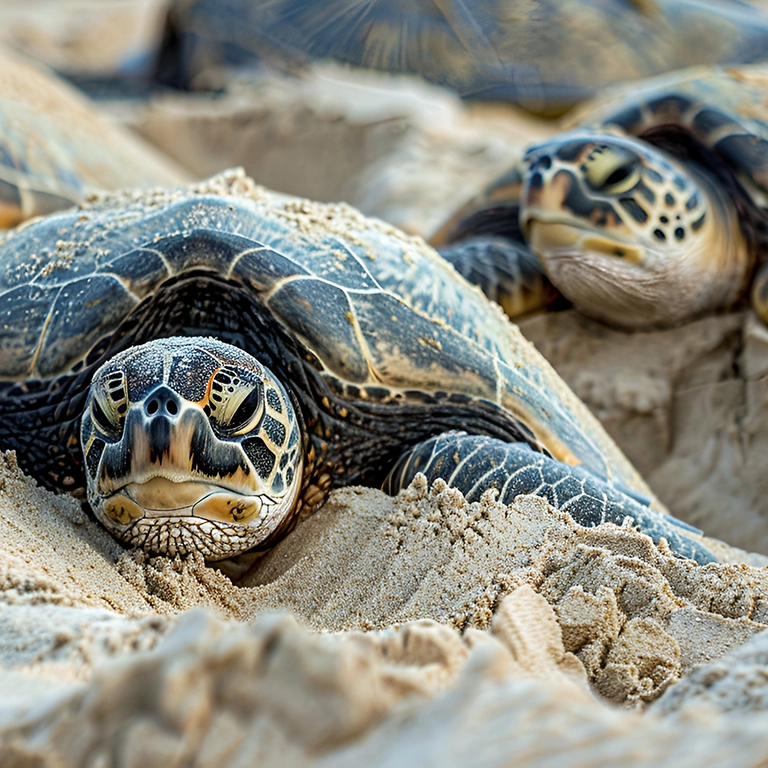
After traveling thousands of kilometers across the open ocean, female sea turtles return to the exact beach where they were born to lay their eggs. Even today, science continues to study how they manage to orient themselves with such precision; one of the most widely accepted theories suggests they use the Earth’s magnetic field as a natural compass.
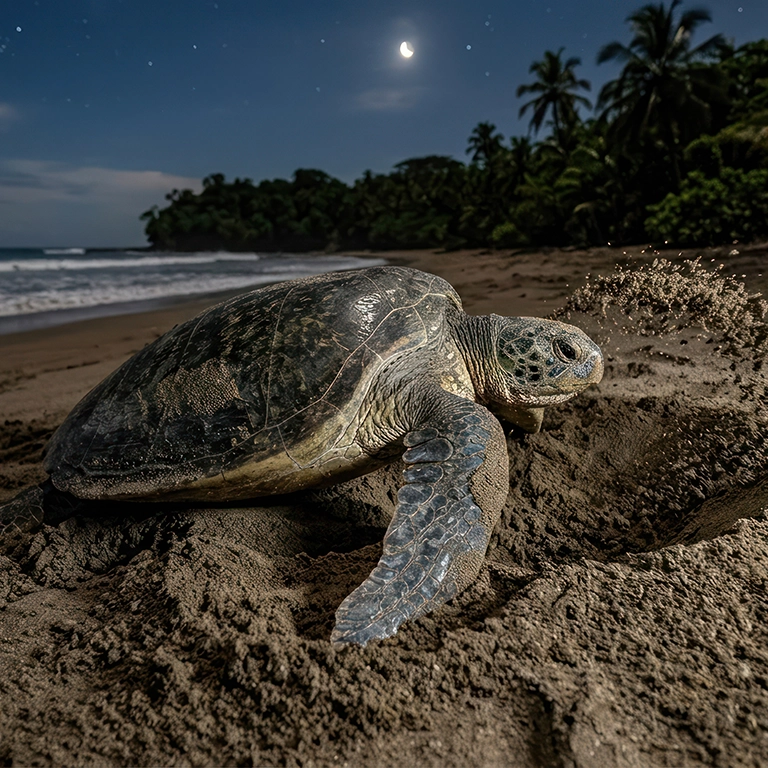
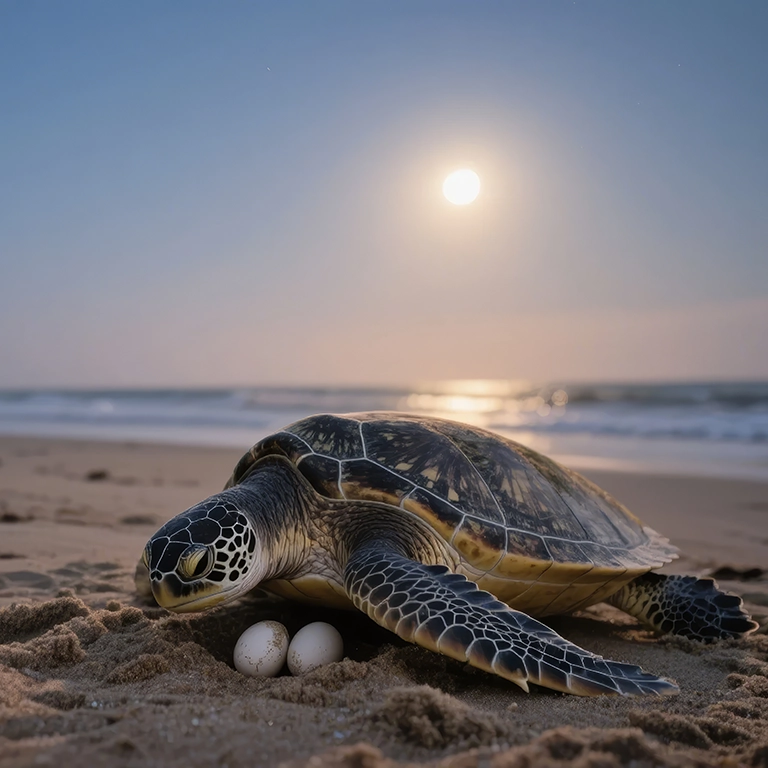
In Quintana Roo, between May and November, the beaches become silent stages for this extraordinary journey. During the night, the females slowly emerge from the sea, move across the sand, and, guided by an ancestral instinct, dig a nest where they lay around one hundred eggs before returning to the ocean.
But the turtles’ life cycle holds even more surprising mysteries. The male hatchlings will never set foot on land again; they will spend their entire lives in the open ocean, traveling among ocean currents and feeding grounds. The females, however, will return to the same beach years later to continue the cycle, and although the baby turtles are born completely alone, never knowing their parents, they carry within them a perfect biological memory that tells them where to go. As soon as they emerge from the nest, they follow the moon’s reflection on the sea and embark on a journey where only a few will manage to survive to adulthood.
A Bridge Between the Sea and Mayan Culture
In Mayan tradition, the turtle was linked to fertility, the earth, and rebirth. Some representations show the world emerging from a turtle’s shell, a symbol of the origin of life and the balance between water and land. It is no coincidence that this animal remains one of the great natural emblems of the Mexican Caribbean. Its presence reminds us that nature functions through precise cycles and that each species fulfills an essential role within the ecosystem.
Turtles help maintain healthy seagrass beds and coral reefs, which are fundamental to marine biodiversity. Furthermore, by nesting, they transport nutrients from the ocean to the beaches, enriching the sand and promoting other ecological processes.
Scientific Work at Turtle Camps
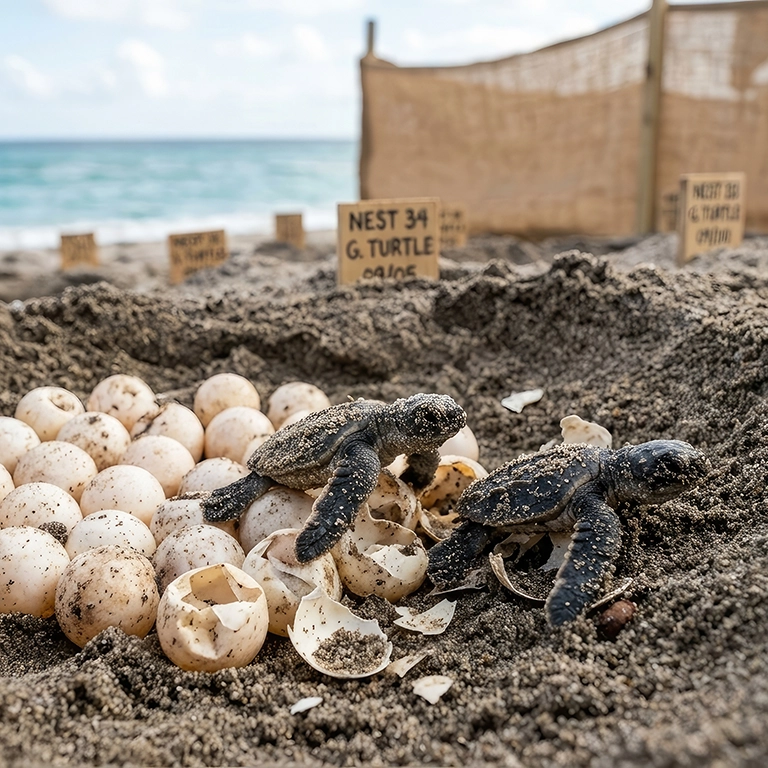
Behind every released turtle lies an enormous scientific and conservation effort. In Quintana Roo, turtle camps work each season to monitor beaches, protect nests, and increase the hatchlings’ chances of survival. Specialists patrol the beaches at night to identify nesting females and locate the nests. When a site is at risk due to erosion, flooding, or human activity, the eggs are carefully transferred to protected incubation pens where their development is monitored until hatching.
This work has been extended to the local population through the National Sea Turtle Conservation Program, which trains specific groups in the protection and management of nesting turtles and their hatchlings. In Cancún, this program is managed by the municipality’s General Management of Ecology. Sunset Royal Beach Resort has participated in the program since 2009: staff receive annual training to protect females during nesting, safeguard the eggs in pens, and assist with the hatching and release of the hatchlings into the sea. To date, they have recovered more than 161,000 eggs and released more than 125,000 sea turtle hatchlings, primarily of the green (Chelonia mydas) and loggerhead (Caretta caretta) species.
A Legacy We Must Protect
Each turtle that returns to Quintana Roo carries with it the memory of the ocean and millions of years of evolution. Its journey represents the persistence of life and the power of the natural cycles that the Maya deeply revered. Today, as environmental threats grow, from plastic pollution to climate change, protecting them has become a vital collective responsibility.
On the beaches of the Mexican Caribbean, under the same sky the ancient Maya gazed upon, the turtles continue to return, and with them comes the opportunity to remember that nature always finds its way back home.