The Mayan culture is much more than myths and rituals. It was one of the most advanced civilizations of the ancient world, with a profound focus on scientific observation, mathematics, and the understanding of nature.
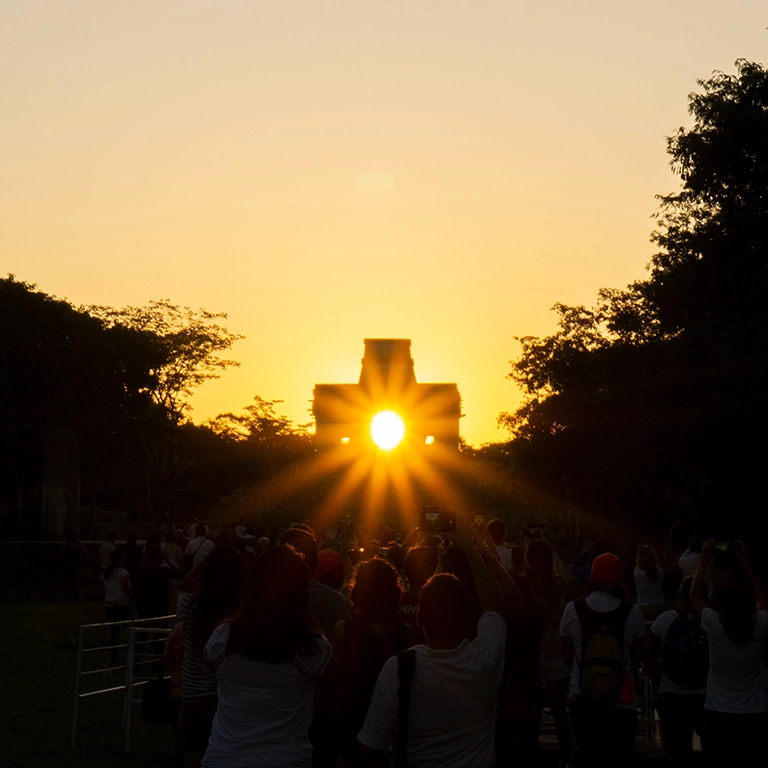
The Maya developed highly precise astronomy. Without telescopes, they were able to calculate the cycles of the Sun, Moon, and Venus with astonishing accuracy, using structures like El Caracol at Chichen Itza, specifically designed for observing the sky. This knowledge was key to agriculture, social organization, and daily life.
In mathematics, they stood out for their vigesimal (base-20) number system and for introducing the concept of zero, a revolutionary advance that allowed them to measure time and record history in detail. Their calendars were not mystical tools, but scientific systems for understanding and organizing natural cycles.
Mayan engineering also reflects a practical and advanced mindset: planned cities, water collection systems, agricultural terraces, and roads that connected entire regions, always in harmony with the environment.
More than a civilization guided by prophecy, the Maya were rigorous observers of the world, capable of transforming knowledge into concrete solutions. Visiting their ancient cities today is to experience a scientific legacy that lives on in every stone and every alignment with the sky.