A Single Territory at the Beginning
When Mexico achieved its independence in 1821, the Yucatán Peninsula (comprising present-day Yucatán, Campeche, and Quintana Roo) was a region known as the Captaincy General of Yucatán, one of the richest and most stable regions of the Viceroyalty of New Spain. Its economy was based on maritime trade with Cuba and the production of henequen, logwood, and cattle. In 1824, with the first Federal Constitution of Mexico, Yucatán became a free and sovereign state, encompassing the entire peninsula.
Separation and Internal Conflicts
During the 19th century, Yucatán maintained a tense relationship with the Mexican central government. Geographic distance, economic differences, and the defense of federalism led to several episodes of separatism. In 1835, the Mexican government imposed a centralist system, Yucatán resisted and declared its independence from Mexico in 1841, proclaiming itself the Republic of Yucatán.
The republic had its own government, flag, and constitution, although it was short-lived. After a serious conflict between the Yucatecan elite and the Mayans to the south, the Caste War began. Mexico offered aid to Yucatán in exchange for reincorporation, which took place in 1848.
Birth of the State of Campeche
Eastern and central Yucatán had economic interests that differed from the port of Campeche, which sought greater autonomy. Political tensions between the Campeche and Merida elites worsened after the Caste War. Finally, in 1857, Campeche officially separated from Yucatán and was recognized as a new state of the Mexican federation.
The Rise of Quintana Roo
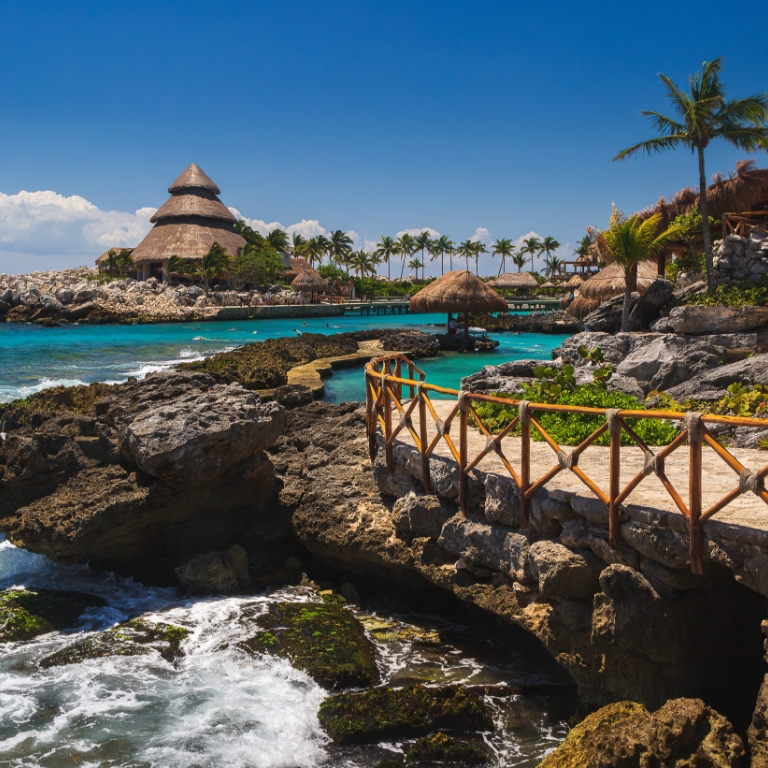
The eastern part of the peninsula is a jungle region with difficult access and came under the control of insurgent Mayan communities. To ensure federal control and encourage colonization of the area, the Mexican government created the Federal Territory of Quintana Roo in 1902, named in honor of Andrés Quintana Roo, a politician from Yucatán who fought in the Mexican war of independence.
Quintana Roo remained a territory for much of the 20th century. It wasn’t until 1974 that it officially became a free and sovereign state, with Chetumal as its capital and Cancún emerging soon after as its economic and tourism hub.
A Legacy of Shared Identity
Despite their political divisions, the three states share a deep peninsular identity, with Mayan roots, similar culinary traditions, and a distinctive accent. Surprisingly, the exact border lines have not yet been defined, and each state’s constitution has its own interpretation of the territory encompassed by its jurisdiction.