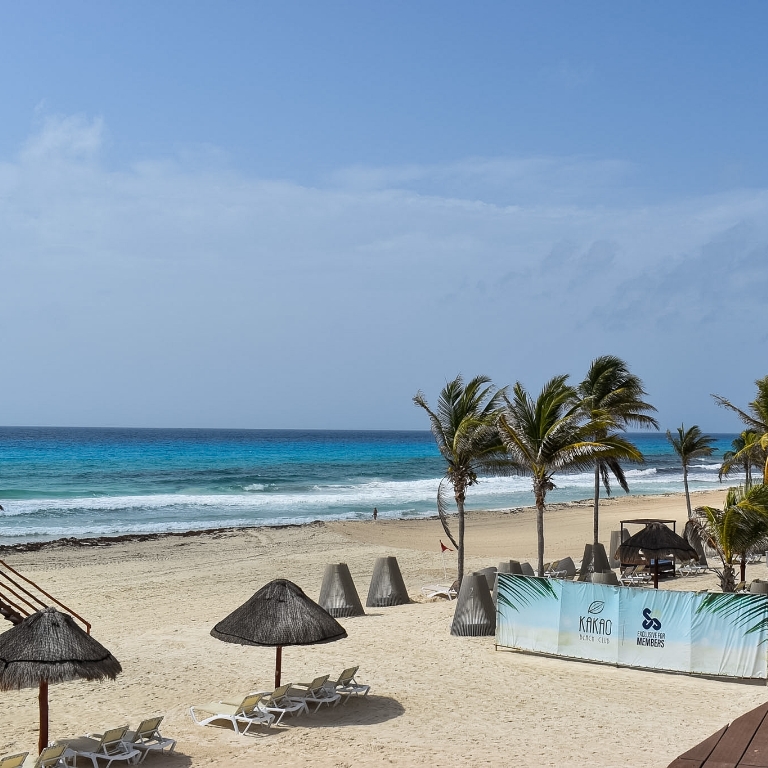
About 150 million years ago, during the Jurassic Period, the Yucatán Peninsula was the bed of a shallow sea where calcareous sediments accumulated. Over the years, this marine platform rose, emerging as land and shaping the peninsula’s current landscape with its karst relief and distinctive formations such as cenotes and caves.
There are no mountains or canyons, and no surface rivers. The karst relief of the Yucatán Peninsula is characterized by its plain, with underground rivers and cenotes formed by the dissolution of limestone by water.